
Category: A to Z
-
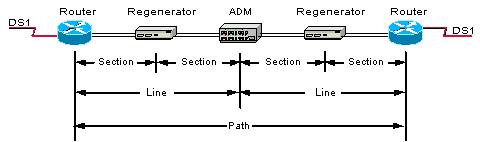
Synchronous Optical Network (SONET)
SONET stands for Synchronous Optical Network is a physical layer specification for broadband synchronous transmission of voice, video, and data over long distances of fiber-optic cabling at speeds of more than 1 Gbps.
-
Understanding Data Source Name (DSN) in Database Management
DSN stands for Data Source Name, is a unique name used to create a data connection to a database using open database connectivity (ODBC).
-
Open Database Connectivity (ODBC)
ODBC stands for Open Database Connectivity is a Microsoft database technology that provides an application programming interface (API) that Microsoft Windows-based applications can use to access structured query language (SQL) databases.
-
Personal Communications Services (PCS)
Personal Communications Services is a general term for digital cellular phone technologies that are used for personal wireless mobile communication.
-
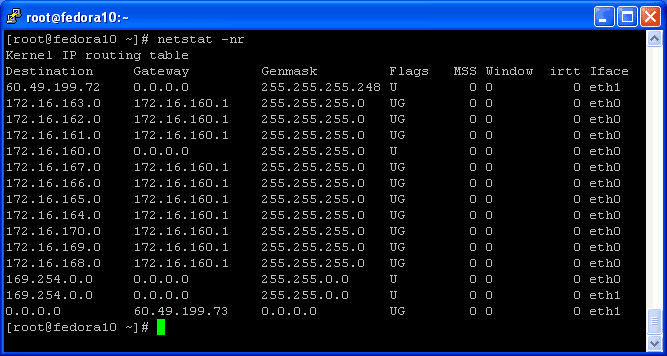
Routing Table
A Routing Table is an internal table that a computer or router uses to determine which router interface to send packets to, based on their destination network addresses.
-

Network Client: Understanding the Concept
Network Client is a software that runs on a client computer and allows it to establish connectivity with services running on server computers.
-
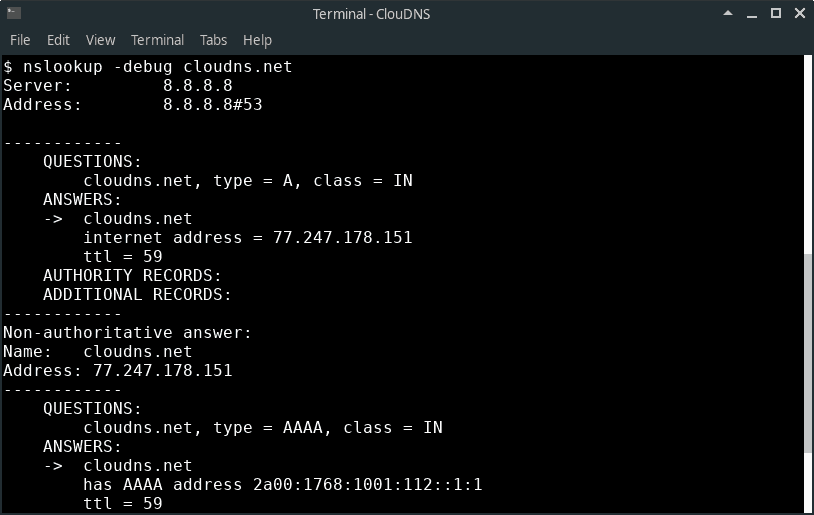
nslookup command
Nslookup is a TCP/IP utility on Microsoft Windows operating systems for diagnosing problems with name servers at the command prompt.
-

Network Access Point (NAP): Gateway to High-Speed Internet Connectivity
NAP stands for Network Access Point is a point at which sections of the Internet’s high-speed backbone are connected.
-
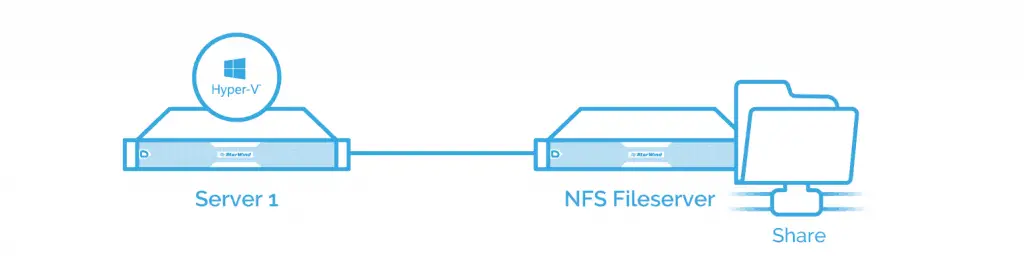
Network File System (NFS)
NFS stands for Network File System, is a client/server distributed file system developed by Sun Microsystems that has become the standard file system for various implementations of the UNIX platform.
-
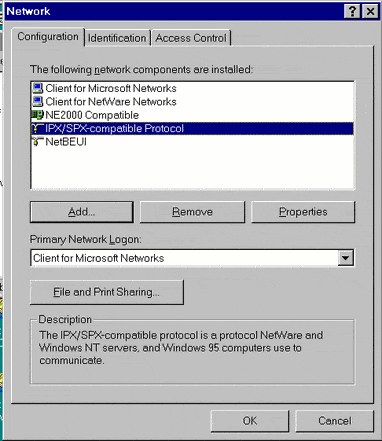
IPX/SPX – Compatible Protocol
IPX/SPX stands for Internetwork Packet Exchange/Sequenced Packet Exchange is a set of network protocols that provide packet switching and sequencing for small and large networks, used initially on networks using the Novell NetWare operating systems.
-
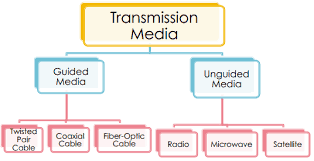
Transmission Media
The term “Transmission Media” is a classification of the pathway that carries the information from a sender to a receiver according to its physical construction and transmission characteristics.
-
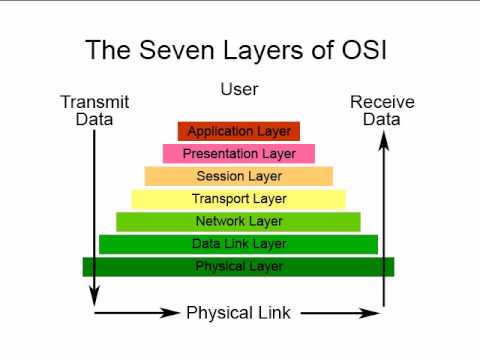
Physical Layer
Physical Layer is the first Layer (or the PHY layer) of the Open Systems Interconnection reference model, also known as the OSI Model or the Seven Layer Model.