
The Editorial Team is a collective of technology enthusiasts, computer network engineers, and industry professionals dedicated to creating meticulously curated content for a diverse readership. With a combined experience spanning several decades, our team distills complex technology topics into clear, informative articles. Whether it’s networking fundamentals, cutting-edge AI insights, or in-depth guides on blockchain technology, the Editorial Team strives to provide reliable information that advances the understanding of technology for everyone from students to seasoned professionals.

Editorial Team’s mission
The Editorial Team’s mission extends beyond mere reporting; we aim to be the architects of understanding, constructing bridges over the rivers of jargon and complexity. From the foundational bricks of networking to the ever-evolving skies of cloud computing, we guide you through the technological labyrinth.
We take pride in our meticulous attention to detail and our unwavering commitment to accuracy, ensuring that each piece of information is a thread in the vast tapestry of technological knowledge. As we chart the course through the evolving landscape of technology, we invite our readers to join us on this exhilarating journey of discovery and growth. Together, we not only explore the current terrain of technology but also anticipate the horizons of tomorrow’s innovations.
Our Latest Articles
-

Proxy Cache Server
Explore the world of Proxy Cache Servers: Unraveling their roles, benefits, comparison with CDNs, and the evolution of Microsoft’s Proxy Server.
-
Microsoft Proxy Server
Definition of Microsoft Proxy Server in the Network Encyclopedia. What was Microsoft Proxy Server? Microsoft Proxy Server was a firewall and content-caching server that provided a secure gateway to the Internet with high response time. Microsoft Proxy Server, was part of the Microsoft BackOffice family of products, was the first firewall product to include high-performance…
-
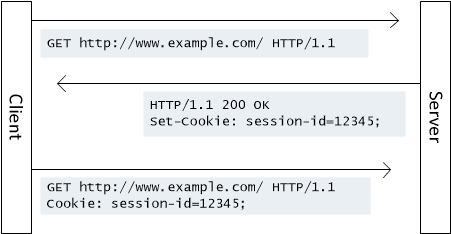
Http Cookie
In Internet technologies, a cookie is a text file that a Web server saves on a client machine during a Hypertext Transfer Protocol (HTTP) session. HTTP Cookies are used to record information about the client’s usage patterns, including the date and time the client visited the site, which pages were accessed, Web browser preferences, and…
-
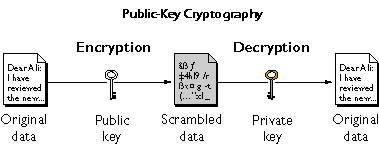
Public Key Cryptography
Public Key Cryptography, also known as asymmetric cryptography, is a popular encryption method developed by Martin Hellman and Whitfield Diffie in 1976 that is used for securing the transmission of data over distrusted networks such as the Internet.
-

Cryptography
Cryptography is the use of codes to convert data so that only a specific recipient will be able to read it, using a key. In networking and telecommunications, is the process of securely transmitting data over a network in such a way that if the data is intercepted, it cannot be read by unauthorized users.
-

MX Record
MX Record stands for mail exchange record, is a resource record in Domain Name System (DNS) databases that is used to implement mail routing. MX records specify the host that will be used to process or forward Simple Mail Transfer Protocol (SMTP) mail for a given DNS domain.
-

User Mode
Explore the multi-faceted concept of User Mode in computing and networking. From restricted modes in Microsoft OS to advanced networking scenarios.
-
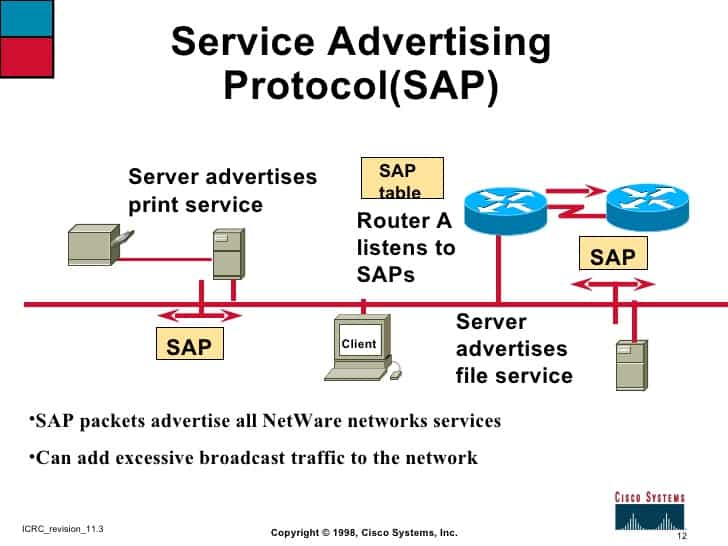
Service Advertising Protocol (SAP)
Service Advertising Protocol, also known as SAP, is a Novell NetWare protocol that is used with Internetwork Packet Exchange (IPX) to enable file and print servers to advertise their availability to clients on a network.
-
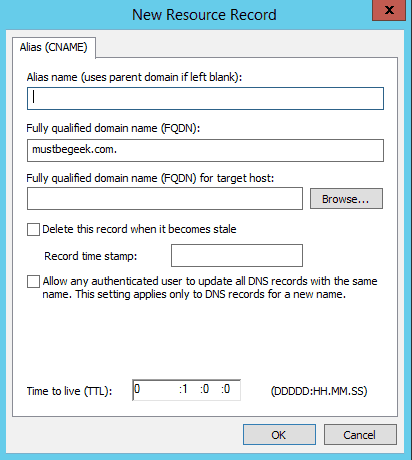
CNAME Record
CNAME Record stands for Canonical Name record, is a Domain Name System (DNS) resource record in a DNS server’s database or zone file. A CNAME record is used to map an alias to the canonical name (true name) of a server.
-

Long filenames in Windows: Bridging the Gap with MS-DOS 8.3
Explore the evolution of Long Filenames in Windows, their technical workings, and enduring significance in modern file management systems.
-
Caching service provider (CSP)
Caching Service Provider, also known as CSP, is a company that maintains caching servers that speed the transfer of information across the Internet’s infrastructure and offers managed access to these servers for a fee.
-

CryptoAPI
CryptoAPI is a core component of the latest versions of Microsoft Windows that provides application programming interfaces (APIs) for cryptographic security services that provide secure channels and code signing for communication between applications.