
The Editorial Team is a collective of technology enthusiasts, computer network engineers, and industry professionals dedicated to creating meticulously curated content for a diverse readership. With a combined experience spanning several decades, our team distills complex technology topics into clear, informative articles. Whether it’s networking fundamentals, cutting-edge AI insights, or in-depth guides on blockchain technology, the Editorial Team strives to provide reliable information that advances the understanding of technology for everyone from students to seasoned professionals.

Editorial Team’s mission
The Editorial Team’s mission extends beyond mere reporting; we aim to be the architects of understanding, constructing bridges over the rivers of jargon and complexity. From the foundational bricks of networking to the ever-evolving skies of cloud computing, we guide you through the technological labyrinth.
We take pride in our meticulous attention to detail and our unwavering commitment to accuracy, ensuring that each piece of information is a thread in the vast tapestry of technological knowledge. As we chart the course through the evolving landscape of technology, we invite our readers to join us on this exhilarating journey of discovery and growth. Together, we not only explore the current terrain of technology but also anticipate the horizons of tomorrow’s innovations.
Our Latest Articles
-
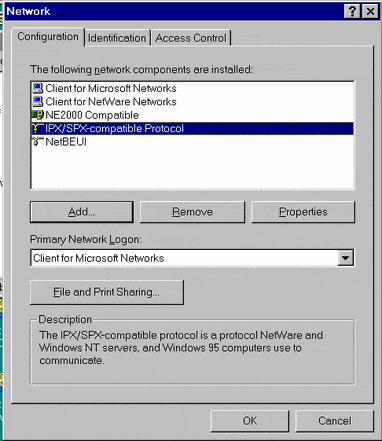
IPX/SPX – Compatible Protocol
IPX/SPX stands for Internetwork Packet Exchange/Sequenced Packet Exchange is a set of network protocols that provide packet switching and sequencing for small and large networks, used initially on networks using the Novell NetWare operating systems.
-
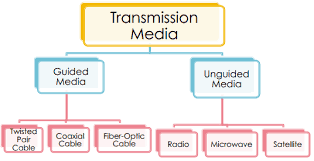
Transmission Media
The term “Transmission Media” is a classification of the pathway that carries the information from a sender to a receiver according to its physical construction and transmission characteristics.
-
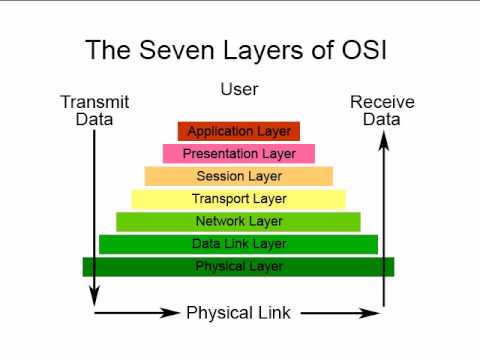
Physical Layer
Physical Layer is the first Layer (or the PHY layer) of the Open Systems Interconnection reference model, also known as the OSI Model or the Seven Layer Model.
-
Windows Share: Your Gateway to Network Collaboration
Share is a way to make resources on a computer available to other users on the network who have suitable permissions.
-
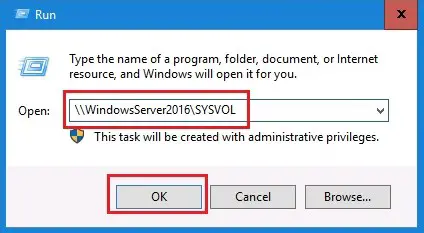
Universal Naming Convention (UNC)
UNC stands for Universal Naming Convention, is a convention for naming shared network resources.
-

Uninterruptible Power Supply (UPS)
Uninterruptible Power Supply, or UPS, is a device that can temporarily provide power to key components of a network if a general power failure happens.
-
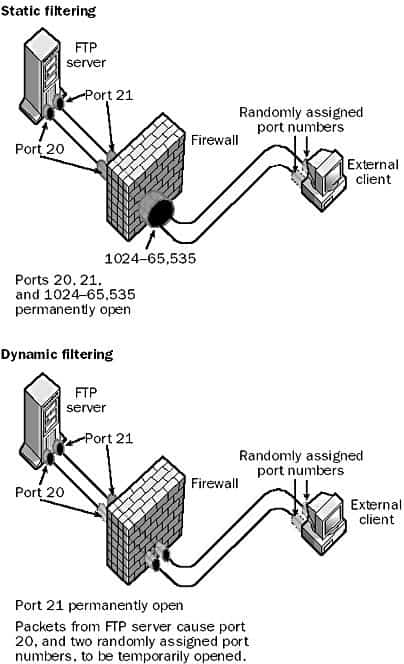
Packet Filtering
Packet Filtering is the process of controlling the flow of packets based on packet attributes such as source address, destination address, type, length, and port number.
-

Direct Inward Dialing (DID)
Gain a comprehensive understanding of Direct Inward Dialing (DID), the telecommunication service that revolutionized corporate communication by enabling direct dialing to extensions.
-
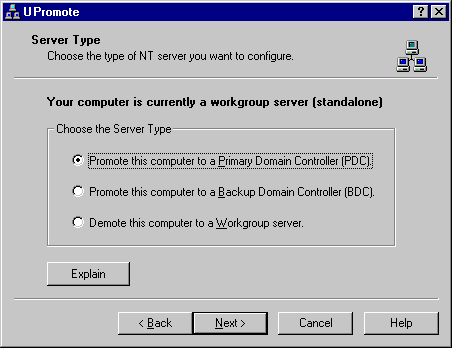
Primary Domain Controller (PDC)
Primary Domain Controller is a Microsoft Windows NT domain controller that contains the master copy of the Security Account Manager (SAM) database.
-
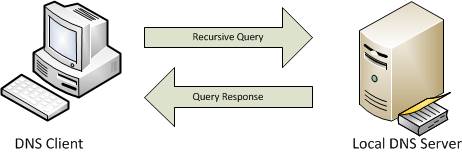
Understanding DNS Query
A DNS query is like sending out a question into the vast network of interconnected devices, seeking the answer to a crucial piece of information: the IP address associated with a particular domain name.
-
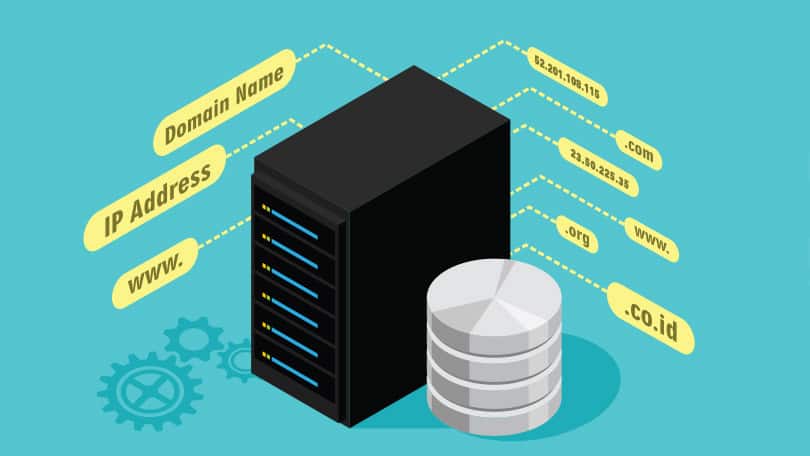
DNS Server
A DNS server is a type of name server that is used to resolve host names or fully qualified domain names (FQDNs) into IP addresses on a TCP/IP network.
-
Primary Name Server
Dive deep into the world of Primary Name Servers, understanding their critical role in DNS, differences from secondary servers, and best practices.