
Our Latest Articles
-
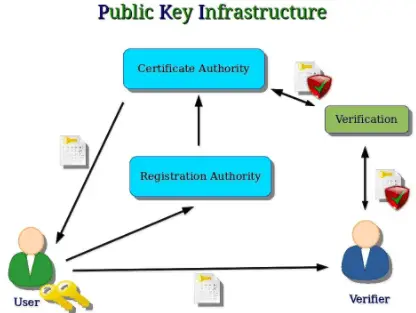
Public Key Infrastructure (PKI)
Public Key Infrastructure, also known as PKI, is a set of services that support the use of public-key cryptography in a corporate or public setting. A public key infrastructure (PKI) enables key pairs to be generated, securely stored, and securely transmitted to users so that users can send encrypted transmissions and digital signatures over distrusted…
-

Digital Signature
Digital Signature is an electronic signature that you can use to sign a document being transmitted by electronic means such as e-mail. Digital signatures validate the identity of the sender and ensure that the document they are attached to has not been altered by unauthorized parties during the transmission.
-

Linux
Linux is an operating system derived from the UNIX family of operating systems that is POSIX-compliant and freely distributed through many sites on the Internet. Linux was developed in 1991 by a student from Finland named Linus Torvalds, who still controls the development of the Linux operating system kernel.
-
![NS Record [DNS System]](https://networkencyclopedia.com/wp-content/uploads/2019/10/ns-record-dns-system.webp)
NS Record [DNS System]
Explore the intricacies of NS Records, a type of DNS resource record vital for identifying name servers. Learn how it interacts with other DNS components like A Records, MX Records, and more.
-
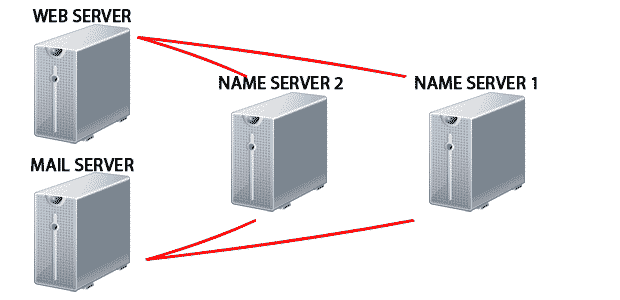
Name Server
Name Server is a host on the Internet or on a TCP/IP internetwork that can be used to resolve host names into IP addresses. Name servers are an essential component of the Domain Name System (DNS), which provides the namespace of all hosts on the Internet or on a private TCP/IP internetwork.
-
Circuit Layer Proxy
Circuit Layer Proxy is any service or server that provides proxy services using a specially installed component on the client computer to form a circuit between the proxy server and the client computer.
-

Proxy Cache Server
Explore the world of Proxy Cache Servers: Unraveling their roles, benefits, comparison with CDNs, and the evolution of Microsoft’s Proxy Server.
-
Microsoft Proxy Server
Definition of Microsoft Proxy Server in the Network Encyclopedia. What was Microsoft Proxy Server? Microsoft Proxy Server was a firewall and content-caching server that provided a secure gateway to the Internet with high response time. Microsoft Proxy Server, was part of the Microsoft BackOffice family of products, was the first firewall product to include high-performance…
-
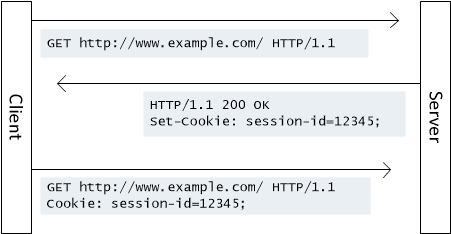
Http Cookie
In Internet technologies, a cookie is a text file that a Web server saves on a client machine during a Hypertext Transfer Protocol (HTTP) session. HTTP Cookies are used to record information about the client’s usage patterns, including the date and time the client visited the site, which pages were accessed, Web browser preferences, and…
-
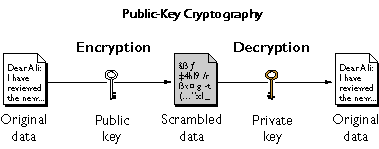
Public Key Cryptography
Public Key Cryptography, also known as asymmetric cryptography, is a popular encryption method developed by Martin Hellman and Whitfield Diffie in 1976 that is used for securing the transmission of data over distrusted networks such as the Internet.
-

Cryptography
Cryptography is the use of codes to convert data so that only a specific recipient will be able to read it, using a key. In networking and telecommunications, is the process of securely transmitting data over a network in such a way that if the data is intercepted, it cannot be read by unauthorized users.
-

MX Record
MX Record stands for mail exchange record, is a resource record in Domain Name System (DNS) databases that is used to implement mail routing. MX records specify the host that will be used to process or forward Simple Mail Transfer Protocol (SMTP) mail for a given DNS domain.