
Category: Networking Fundamentals
-

Static Routing: A Comprehensive Guide
Static Routing is a routing mechanism that is handled by the Internet Protocol (IP) and that depends on manually configured routing tables.
-

Master Name Server: Understanding Its Role in DNS Architecture
Unravel the complexities of the Master Name Server in DNS systems, and explore its distinct role and differences from Primary Name Servers.
-
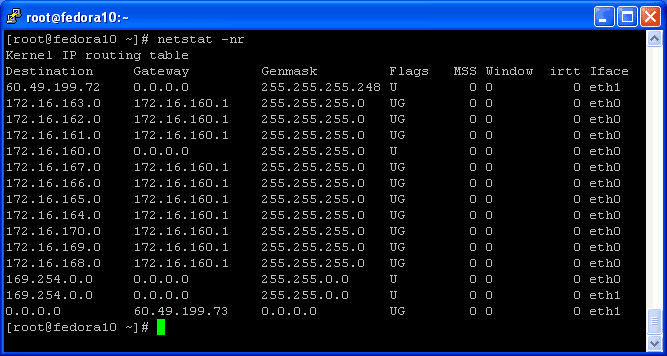
Routing Table
A Routing Table is an internal table that a computer or router uses to determine which router interface to send packets to, based on their destination network addresses.
-

Network Client: Understanding the Concept
Network Client is a software that runs on a client computer and allows it to establish connectivity with services running on server computers.
-

Network Access Point (NAP): Gateway to High-Speed Internet Connectivity
NAP stands for Network Access Point is a point at which sections of the Internet’s high-speed backbone are connected.
-
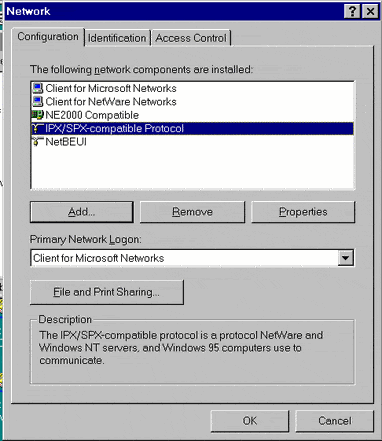
IPX/SPX – Compatible Protocol
IPX/SPX stands for Internetwork Packet Exchange/Sequenced Packet Exchange is a set of network protocols that provide packet switching and sequencing for small and large networks, used initially on networks using the Novell NetWare operating systems.
-

Primary Name Server
Dive deep into the world of Primary Name Servers, understanding their critical role in DNS, differences from secondary servers, and best practices.
-
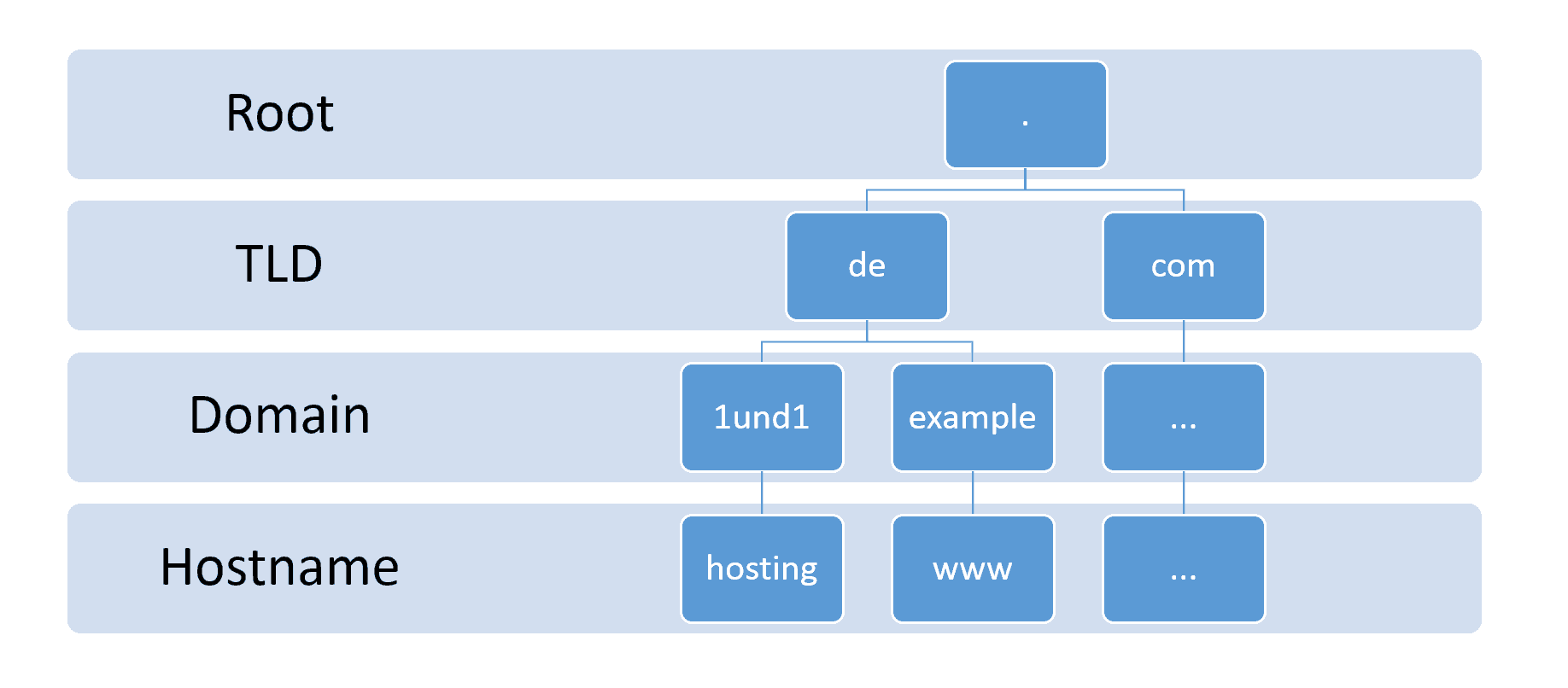
FQDN: Fully Qualified Domain Name
Dive into the essentials of FQDN, understanding its structure, significance in DNS, and its role in the digital world. A complete guide to fully qualified domain names.
-
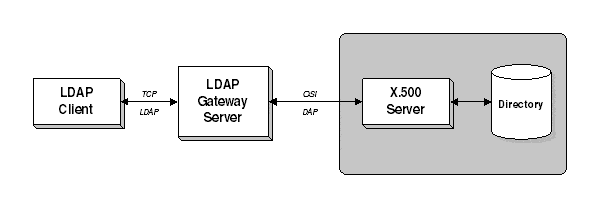
Lightweight Directory Access Protocol (LDAP)
LDAP stands for Lightweight Directory Access Protocol is an Internet protocol for accessing and updating information in an X.500-compliant directory.
-

Caching-Only Name Servers: Enhancing DNS Efficiency
Caching-only Name Server is a name server in the Domain Name System (DNS) that can resolve name lookup requests but does not maintain its own local DNS database or zone file of resource records.
-

Customer Premises
Customer Premises is a general term referring to your local company’s networking environment.
-

Telecommunications Industry Association (TIA): Pioneering the Telecommunications Revolution
Dive into the TIA’s impact on telecom, exploring its origin, role, and influence in shaping our connected world.